Ithaca City of Asylum
Providing refuge for persecuted writers and artists since 2001
Arthur Groys offers shadow puppet workshop for kids
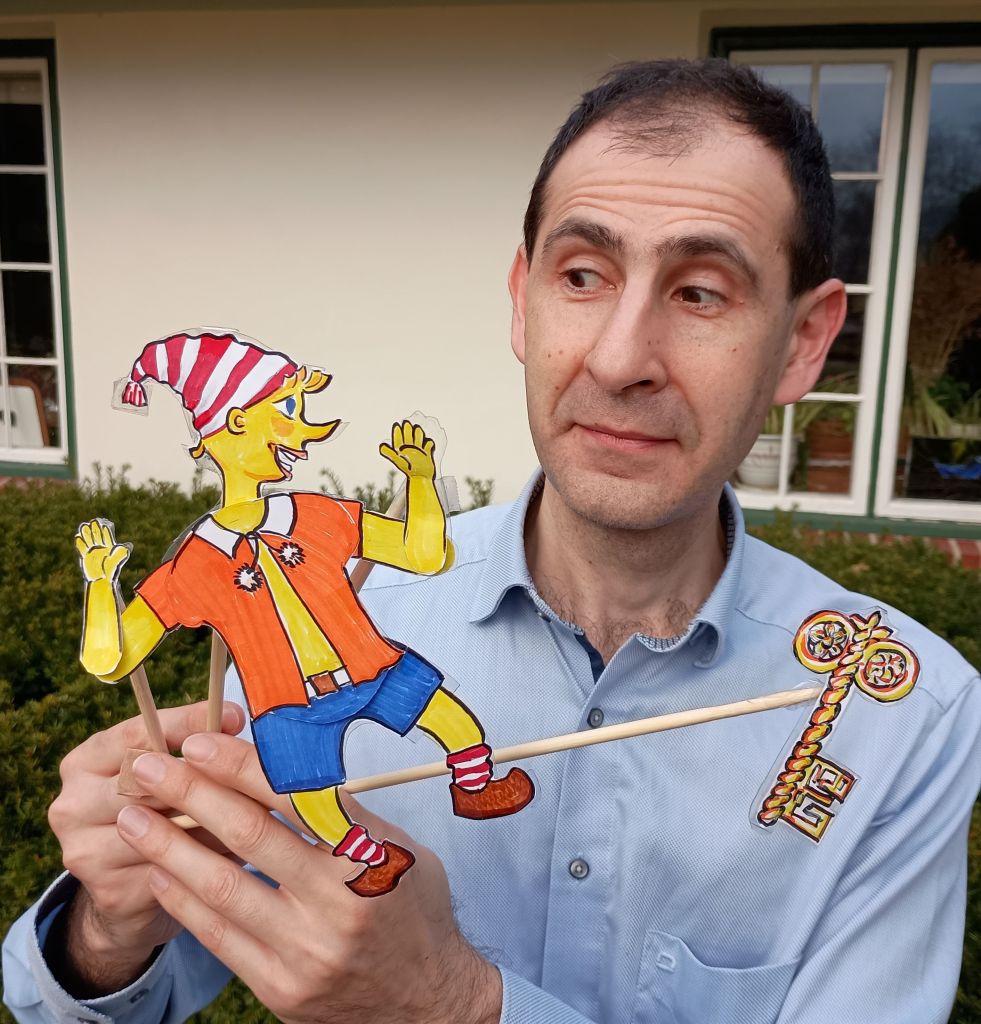
Light & Shadow Puppet Workshop with Arthur Groys
Saturday, May 2, 2026, 2 – 4 pm
Tompkins County Public Library
Borg Warner West Room
For kids 7 & up
Register now to save your spot
Ithaca City of Asylum artist-in-residence Arthur Groys will lead a free workshop at the Tompkins County Public Library on May 2 from 2 to 4 pm. Arthur will introduce participants to the art of shadow theater and demonstrate several puppet-theater techniques. The kids will then create their own shadow puppets and take part in a collective shadow theater performance, which will be presented to parents or guardians at the end of the session.
Space is limited and registration is required. Register here.
Best for children 7 and up. Children will need to be able to use scissors.
Originally from Russia, Arthur Groys has worked as a puppeteer, actor, theater and film director, as well as a drama and arts & crafts instructor. He is currently a Visiting Affiliate Artist at Ithaca College.
Molina & Lehmann kick off Imagine! series
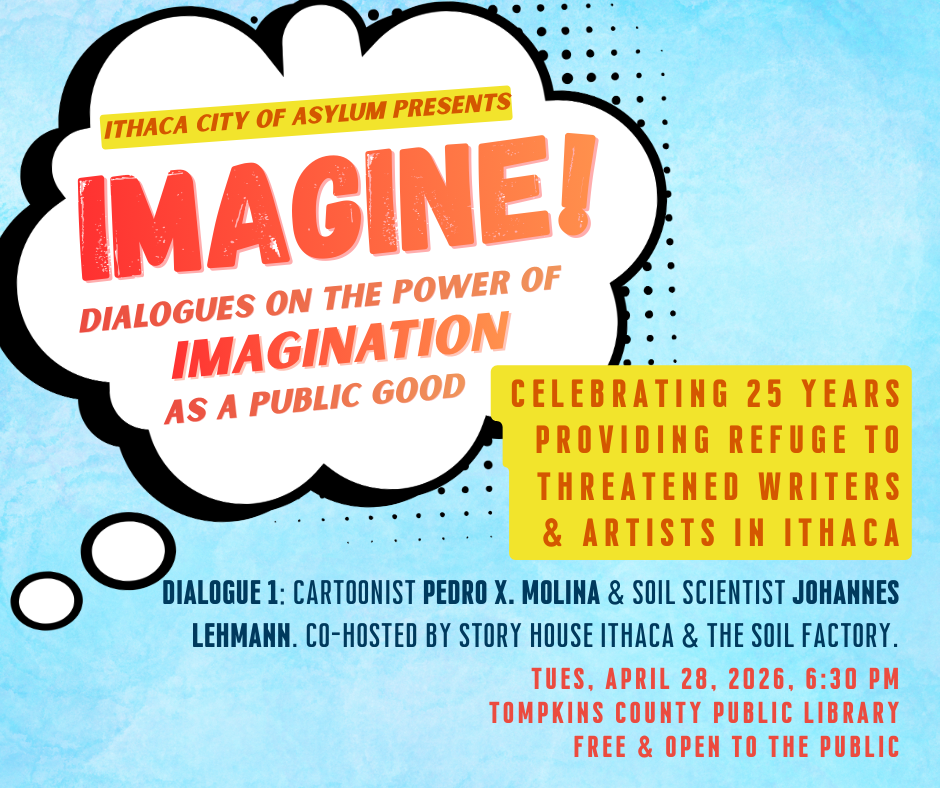
Imagine! Pedro X. Molina and Johannes Lehmann
Tuesday, April 28, 6:30 p.m.
BorgWarner Room West, Tompkins County Public Library
Free and open to the public
Nicaraguan cartoonist Pedro X. Molina (winner of the Václav Havel Prize for Creative Dissent, finalist for the 2026 Herblock Prize) and Cornell soil scientist Johannes Lehmann (member of the National Academy of Sciences, co-founder of The Soil Factory) kick off the Imagine! series celebrating the 25th anniversary of Ithaca City of Asylum. Molina and Lehmann are working on a graphic novel together. They will talk about their creative collaboration and what imagination means to them.
Twenty-five years ago, a group of local writers declared Ithaca a place where persecuted writers and artists could safely speak their minds and exercise their imaginations. Since then, our community has welcomed creative and courageous people from China, Iran, Swaziland, Georgia, Sri Lanka, Pakistan, Nicaragua, and Russia for two-year residencies.
Join Ithaca City of Asylum in this anniversary year for Imagine!, a series of dialogues on the power of imagination as a public good. Each invites a former program participant and a local resident working creatively in another field to share their perspectives on making art, exercising rights, and imagining a better world for all. Ithaca City of Asylum is a project of the Center for Transformative Action. The Imagine! series is co-hosted by Story House Ithaca and The Soil Factory.
Imagine! series celebrates ICOA’s 25th anniversary
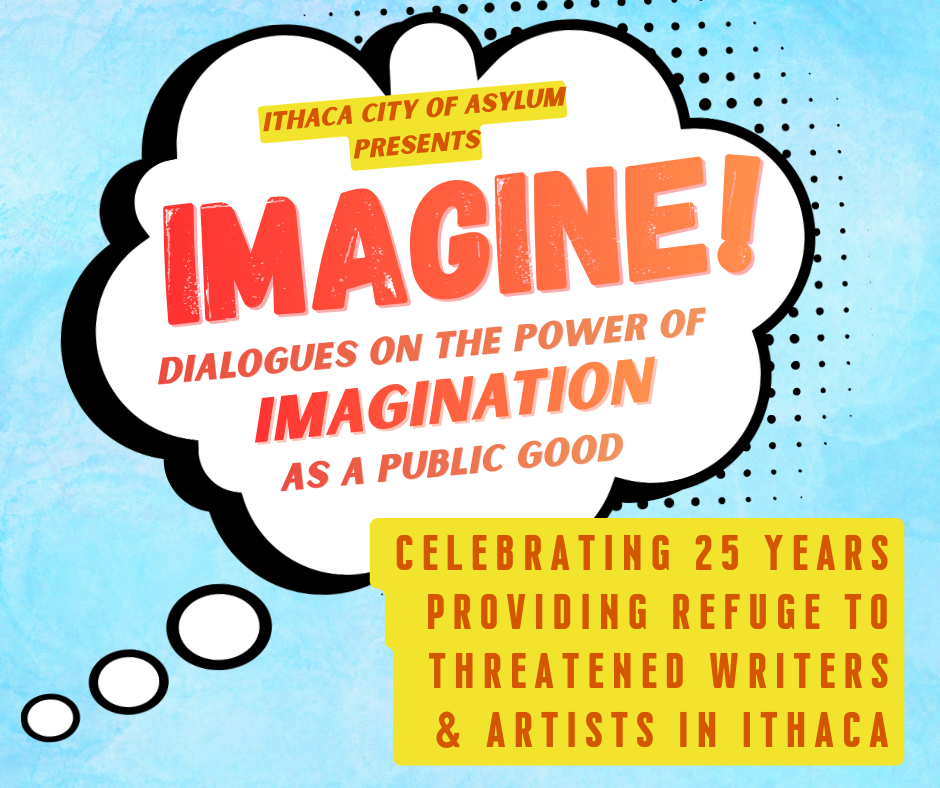
Celebrate Ithaca’s 25th anniversary as a refuge for threatened writers and artists with this series of dialogues exploring the power of imagination as a public good.
Twenty-five years ago, a group of local writers declared Ithaca a place where threatened writers and artists could safely speak their minds and exercise their imaginations. Since then, our community has welcomed creative and courageous people from China, Iran, Swaziland, Georgia, Sri Lanka, Pakistan, Nicaragua, and Russia for two-year residencies.
Join Ithaca City of Asylum in this anniversary year for Imagine!, a series of dialogues on the power of imagination as a public good. Each invites a former program participant and a local resident working creatively in another field to share their perspectives on making art, exercising rights, and imagining a better world for all. Ithaca City of Asylum is a project of the Center for Transformative Action. The Imagine! series is co-hosted by Story House Ithaca and The Soil Factory.
Voices of Freedom: Pedro X. Molina on milestones of Latin American democracy
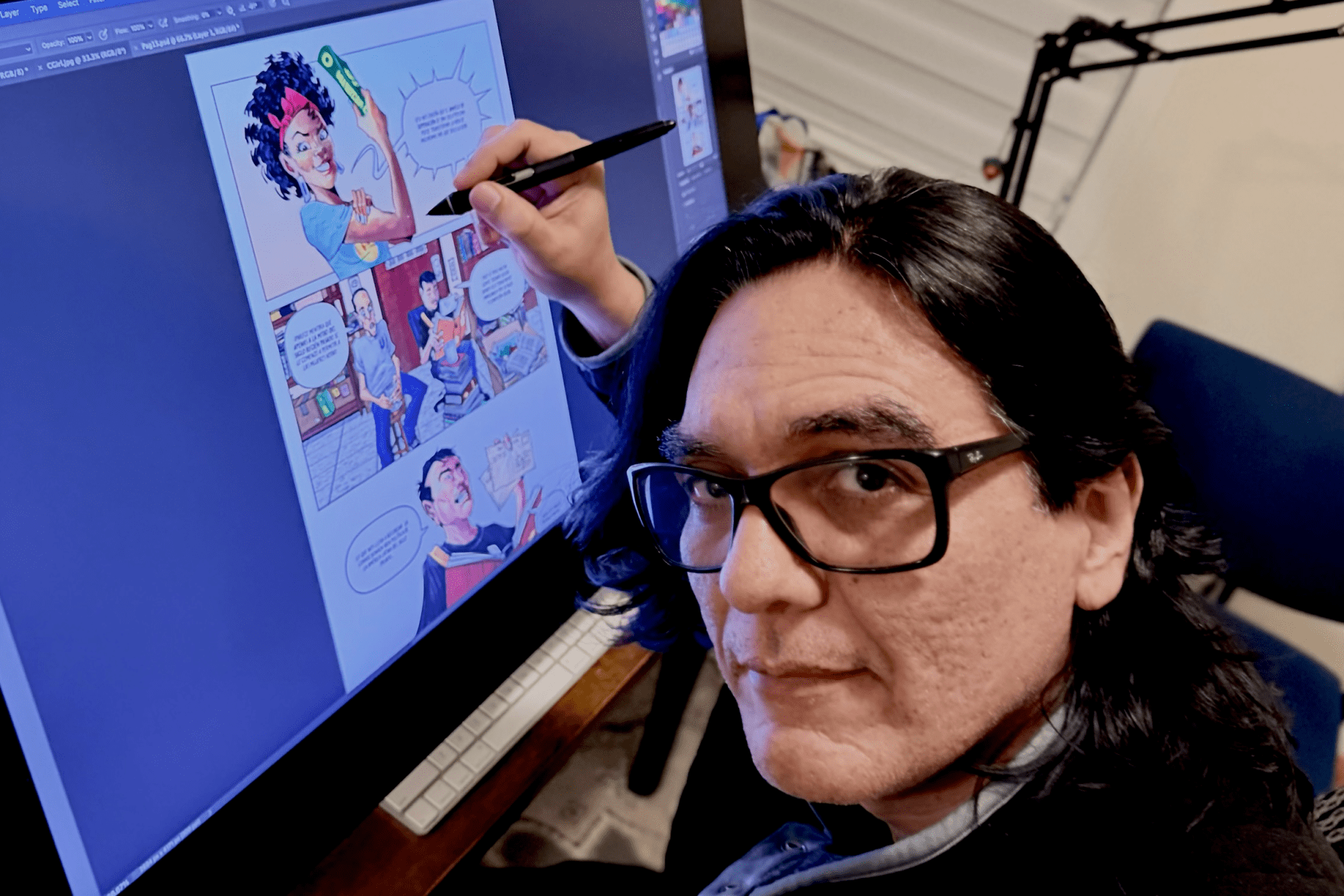
A Voices of Freedom celebration, hosted by Ithaca City of Asylum
Thursday, December 4, at 5:45 p.m.
BorgWarner Room of the Tompkins County Public Library
101 E. Green St., Ithaca 14850
Free and open to the public • Refreshments will be served
Ithaca City of Asylum (ICOA) invites the community to attend Voices of Freedom, our annual event recognizing artists who continue to create despite persecution. This year we celebrate the publication of a graphic novel, Hitos de la Democracia (Milestones of Latin American Democracy), by former ICOA artist-in-residence Pedro X. Molina. It will be published in December by the United Nations Development Programme.
This U.N. program produces an annual report about democracy, usually consisting of formal papers by specialists; but this year, Molina notes, they wanted to address the general public, especially young people. His graphic novel is one of three being published; the others cover Mexico and El Salvador.
At the December 4 event, Molina will speak about the development of his novel, including the preparatory work and creative process. He’ll project images from the work and provide translation of the Spanish captions. (Versions in English, French, and Portuguese are forthcoming.)
“From working on this project,” Molina says, “I realized that if you’re waiting for the ideal movement or a magical leader, history teaches you that in fact it’s the work of community –– getting together toward a common goal –– that’s the most important for change to happen.”
An internationally known political cartoonist focusing on Nicaragua and Latin America, Molina publishes regularly for the independent news site Confidencial. His work is also published in CounterPoint and on the cartoon website Tinyview. His cartoons are in syndication with Tribune Content Agency, which distributes them throughout the US. Among other awards, Molina received the distinguished Václav Havel Prize for Creative Dissent in 2023, which recognizes individuals “who engage in creative dissent, exhibiting courage and creativity to challenge injustice and live in truth.” And in 2024, he was a finalist for the Herb Block Prize as a political cartoonist.
Molina and his family fled Nicaragua in December 2018 after a government crackdown on journalists, arriving here to become Ithaca City of Asylum’s seventh resident artist. After his two-year residency, Molina and his family settled in Ithaca to live and work; he currently serves on the ICOA board.
Voices of Freedom is generously funded by the Grants for Art Program of the Community Arts Partnership and co-sponsored by the Tompkins County Public Library.
This program is made possible in part with funds from the Statewide Community Regrant program from the New York State Council on the Arts, with the support of the office of the Governor and NYS Legislature,administered by the Community Arts Partnership of Tompkins County.

ICOA mourns passing of its first resident artist, Chinese poet Yi Ping
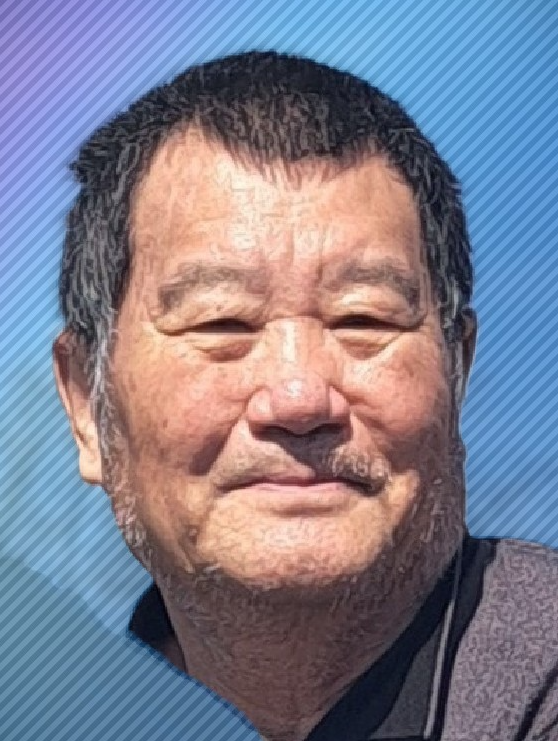
Yi Ping
(24 July 1952 – 30 December 2024)
Yi Ping –– poet, essayist, teacher, and cultural critic –– died of cancer on December 30, 2024, after a brief illness. He is survived by his wife Lin Zhou and son Mao; commemorative services were held in Candor on January 5, 2025, attended by friends and extended family.
Yi Ping (born Li Jianhau in Beijing, China) was the first exiled writer–in-residence of the newly founded Ithaca City of Asylum. He and his family arrived in Ithaca from New York City the week after 9/11. They had come to the U.S. after two stays in Poland when life in Beijing had proved dangerous: Yi Ping had published in a pro-democracy journal that was later banned and sponsored an art exhibition that was soon closed; his participation in the 1989 Tiananmen Square pro-democracy movement resulted in his being permanently prohibited from teaching and publishing. (In their teens, Yi Ping and Lin had already survived hard labor in the countryside as part of Mao Zedong’s Cultural Revolution.)
During his ICOA residency (2001-03), Yi Ping taught Chinese at Cornell University, participated in ICOA’s annual Voices of Freedom events, and collaborated with Ithaca College professor Jerry Mirskin and students in a poetry translation course. Now able to write freely, Yi Ping published in Chinese language journals and supported dissident Chinese writers. His wife Lin worked in Alumni Affairs and Development at Cornell University, and they eventually bought a house in Newfield, New York, and were happy to make their home in this area. A hardworking craftsman with his hands as well as his words, Yi Ping restored their home as well as several others he brought to life and use again.
Yi Ping’s works include the poetry collections Blue Sunflowers, Drifting Boats, and Thorn Birds; the essay collection, The Fields Behind Tree; and an unfinished epic, The Hunter Hai Li Bu. With writer and Nobel Prize nominee Zheng Yi, in 2001 he co-founded the still-thriving Independent Chinese PEN Center, of which he was an early director and continuing positive contributor.
Kind, gentle, and modest, Yi Ping was a generous friend and warm host, his beautiful and ready smile welcoming everyone. His radiant spirit and work reflected his favorite quote by W. H. Auden on Yeats: “With the farming of a verse / make a vineyard of the curse.”
Two longtime friends and close colleagues of Yi Ping — Zheng Yi and his wife, the journalist Bei Ming — composed a tribute, which Zheng Yi delivered at the memorial service: “Ithaca, the homeland of the Greek hero Odysseus from Homer’s epics, calls for his return across time. Three thousand three hundred years later, Ithaca gave Yi Ping, who had lost his homeland, a warm refuge, allowing him to ‘dwell poetically’ here and pursue the homeland of his soul.”
Another friend said:“A sincere and genuine individual who treated others with heartfelt honesty, Yi Ping was a diligent and humble teacher, as well as a solitary yet resilient poet. While he brought warmth and encouragement to others, he bore the unbearable weight of life deep within himself.”
We’re proud to have been associated with Yi Ping and grateful to have been friends with him and his family. We mourn his passing.
At the family’s request, donations can be made in Yi Ping’s honor to Ithaca City of Asylum, at https://ithacacityofasylum.org/donate/.
ICOA hosts “Comedy, Puppets and Fantastical Tales”
“Comedy, Puppets, and Fantastical Tales,” showcasing the work of Russian playwright, filmmaker, author, and puppeteer Arthur Groys, will be held at Kitchen Theatre Company in Ithaca, NY, on Monday, October 7 at 6:00 p.m. The event is free and open to the public.
For more information, please visit our event page: Voices of Freedom: An Evening of Stories
ICOA welcomes Arthur Groys
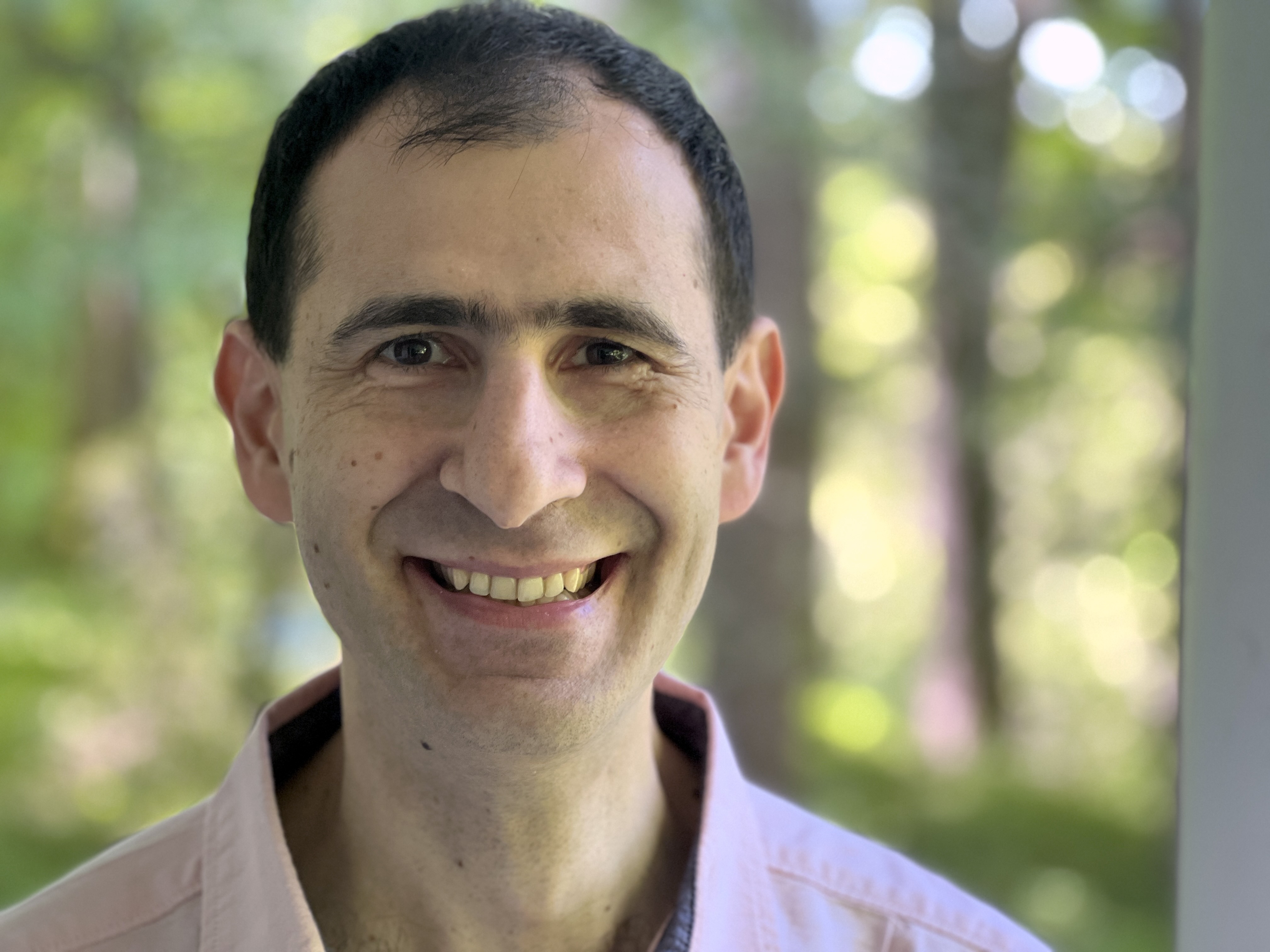
Ithaca City of Asylum (ICOA) is pleased to welcome Arthur Groys as its ninth resident writer. He is in Ithaca with his family as an Artist Protection Fund Fellow in residence at Ithaca College and ICOA.
Arthur has written for and directed several popular TV and radio shows for children and family audiences in Russia. He has also been an actor, puppeteer, stage director, and acting instructor.
“As a literary artist, I am always making up stories and adventures for my characters, with challenges and obstacles,” he said. “Now my family and I have become characters ourselves. It is not easy! But I am very thankful to everyone who has helped us come and stay here in Ithaca.”
Arthur studied classical Russian drama and puppetry and has written plays for children and teenagers that have been staged in Russia and abroad. He has also written books of comedic and fantastic poetry, sketches, stories, and novels for children and teenagers. Arthur speaks several languages and often performs in English or French.
In 2022, with the escalation of the Russia-Ukraine War and ongoing political turbulence in Russia, he was awarded a prestigious Artist Protection Fund Fellowship, and subsequently fled to Israel, where he was granted the designation of Distinguished Artist. He and his family relocated to Ithaca in April 2024.
An initiative of the Institute of International Education, the Artist Protection Fund (IIE-APF) fills a critical unmet need by protecting threatened artists and placing them at welcoming host institutions in safe countries where they can continue their work and plan their futures. IIE-APF places these artists in safe havens for a full year and provides fellowship funding, mentoring, and inclusion in a comprehensive network of artistic and social support.
Founded in 2001, ICOA provides sanctuary to writers and artists whose works are suppressed, whose lives are threatened, whose cultures are vanishing, or whose languages are endangered. ICOA is an all-volunteer project of the Center for Transformative Action, a 501(c)3 non-profit organization affiliated with Cornell University, and a member of the International Cities of Refuge Network, which joins communities around the world advocating for freedom of expression.
ICOA is supported by individual donations and by generous grants from the Park Foundation, Cornell University, the Crime Victims & Sexual Assault Survivors Fund of the Community Foundation of Tompkins County.
Afghan filmmaker opens eyes and touches hearts during Ithaca visit
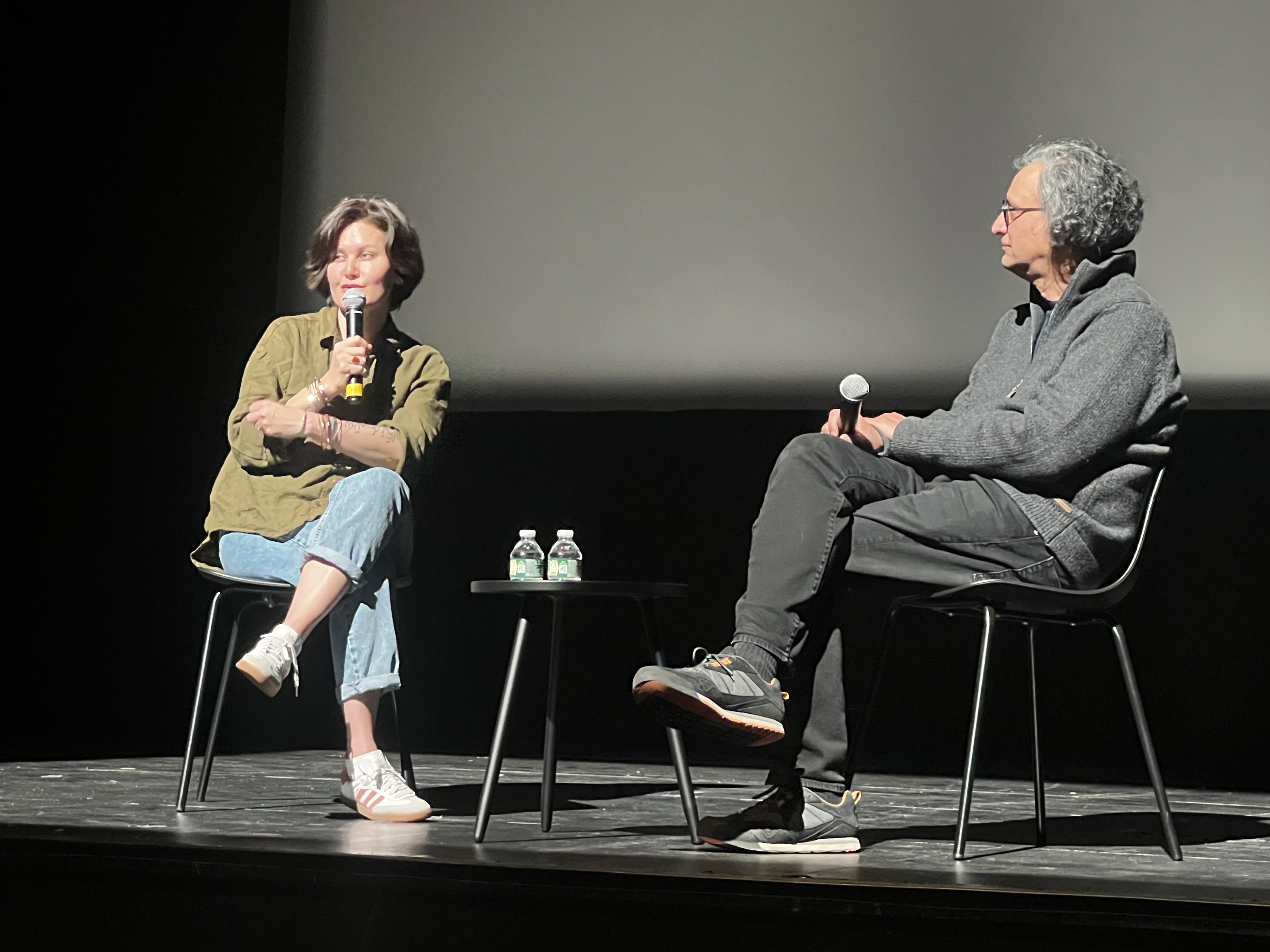
Filmmaker Sahraa Karimi, the first female chair of the Afghan Film Organization who fled when the Taliban seized power in 2021, spent three days in Ithaca as a guest of Ithaca City of Asylum. Highlights included two well-attended public screenings, a guest lecture, and meetings with students, staff, and faculty at Cornell University, Tompkins Cortland Community College (TC3), and Ithaca College.
ICOA teamed up with Cornell’s South Asia Program, part of the Mario Einaudi Center for International Studies, in bringing Karimi to Ithaca and hosting her during her stay.
Karimi spent Wednesday, March 6 at Cornell, where she met with Afghan students and scholars and gave a guest lecture in the course “The Cultural and Political History of Modern Afghanistan” taught by visiting scholar Sharif Hozoori, who is at Cornell under the university’s Scholar Under Threat program. After dinner with students at Carl Becker House, she screened her award-winning 2009 documentary Afghan Women Behind the Wheel for more than 70 people at Cornell Cinema. The screening was followed by a spirited Q&A led by art history professor Iftikhar Dadi.
On March 7, Karimi traveled to TC3, where she showed a short film to 45 students, faculty, and staff. She spent the latter part of the afternoon at Ithaca College, where she toured the film department and screened a film for students in the course “Modern South Asia” taught by associate professor (and ICOA chair) Jason Freitag.
Her visit was capped by a Thursday evening screening of her 2019 drama Hava, Maryam, Ayesha to 100 moviegoers at Cinemapolis. The film is an intimate look into the lives of three women from different social backgrounds facing personal crises in pre-takeover Kabul. After the film, she spoke with Zillah Eisenstein, emerita professor of politics and gender studies at Ithaca College, before taking questions from the audience. She decried the US role in the fall of Afghanistan, described what it was like to be “at the top of the Taliban’s kill list,” and spoke of the challenges of working on Afghan themes while in forced exile overseas.
Karimi’s visit was made possible in part by funds from the Statewide Community Regrants program from the New York State Council on the Arts, with the support of the Office of the Governor and NYS Legislature, and from Tompkins County, administered by the Community Arts Partnership of Tompkins County. Additional financial support was provided by a Title VI grant from the U.S. Department of Education. Accommodations were provided by Cornell’s Carl Becker House.
Thanks to Daniel Bass and Gloria Lemus-Chavez of the South Asia Program, Kathi Colen Peck of the Einaudi Center, and Amanda Carreiro and Lori Leonard of Becker House for help with logistics, transport, food, and lodging.
ICOA brings trailblazing Afghan filmmaker to Ithaca
Free public screenings 3/6 at Cornell Cinema and 3/7 at Cinemapolis

Ithaca City of Asylum is bringing the award-winning filmmaker Sahraa Karimi to Ithaca for a three-day visit timed to coincide with International Women’s Day. Karimi, the first and only Afghan woman with a PhD in film, will publicly screen two of her feature-length films and meet with students and faculty at Cornell University, Tompkins Cortland Community College, and Ithaca College.
Sahraa Karimi is an independent director and screenwriter with more than 30 films to her credit. In 2012, she established a production company in Kabul to support Afghan independent filmmakers and artists but she was forced to leave the country after the Taliban returned to power in 2021.
Karimi will spend Wednesday, March 6, at Cornell as a guest of the South Asia Program at the Mario Einaudi Center for International Studies. She will be at Cornell Cinema at 7 p.m. to screen her 2009 documentary, Afghan Women Behind the Wheel. The film won more than 20 prizes at film festivals around the world. After the screening, Karimi will speak with Cornell art history professor Iftikhar Dadi and take questions from the audience. More information is here.
On Thursday, March 7, Karimi will spend the day with students at Tompkins Cortland Community College and Ithaca College. She will be at Cinemapolis at 6:30 p.m. for a public screening of her first feature fiction film, Hava, Maryam, Ayesha.
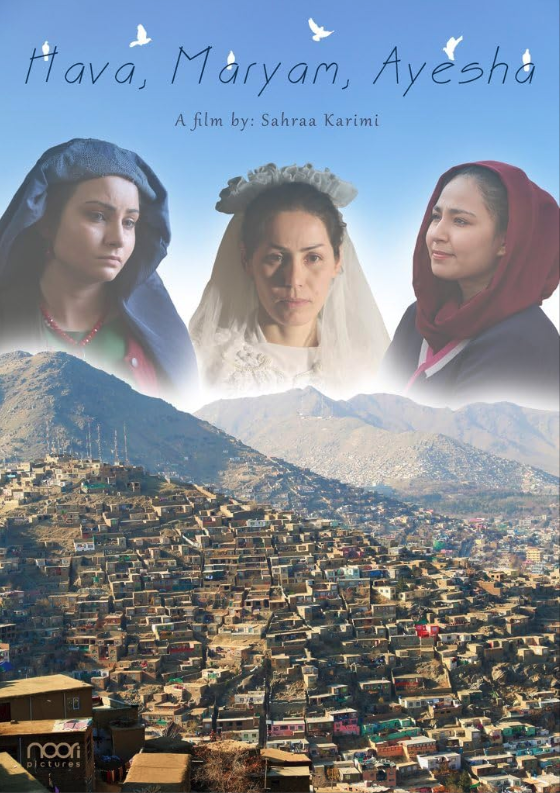
The film, which was Afghanistan’s entry for the 2019 Oscars, braids together the stories of three women from very different backgrounds confronting personal crises in modern-day Kabul. Karimi will be available after the film for a Q&A. Free tickets will be available on the Cinemapolis website and at the box office.
Sahraa Karimi’s visit is made possible in part by funds from the Statewide Community Regrants program from the New York State Council on the Arts, with the support of the Office of the Governor and NYS Legislature, and from Tompkins County, administered by the Community Arts Partnership of Tompkins County. Additional financial support is provided by a Title VI grant from the U.S. Department of Education. Accommodations and meals are provided by Carl Becker House.
Video now available for Ramírez-Molina conversation
“Truth, Lies, and Literature: Sergio Ramírez and Pedro X. Molina in Conversation” on October 15, 2023 featured Nicaragua’s best-known author in dialogue with the celebrated Nicaraguan cartoonist and former ICOA artist-in-residence. The video is now available here. A transcript of the excerpt read by Ramírez is below.
The event was made possible by funds from the Statewide Community Regrants program from the New York State Council on the Arts, with the support of the office of the Governor and NYS Legislature, and from Tompkins County, administered by the Community Arts Partnership of Tompkins County. It was co-hosted by Story House Ithaca and the Latin American and Caribbean Studies Program at the Mario Einaudi Center for International Studies at Cornell University.
THE MATTRESS FACTORY
Excerpt from Dead Men Cast No Shadows (2023) by Sergio Ramírez Mercado.
Translated from the Spanish by Daryl R. Hague.
As Tongolele looked through the windows’ ironwork, he saw that the entire first floor was dedicated to the mattress factory: sewing machines, rolls of striped and printed fabrics for upholstery, mounds of foam pads, piles of waste cotton, and stacks of finished products….
Lightbulbs still glowed on porches and under the eaves of houses during this early morning hour, and the silence of the closed doors was broken only for an instant by a child ‘s cry, which was quickly muffled. A great-tailed grackle used its beak to gather scraps from the pavement. Suddenly, it fixed its round eye upon him. Distrustful, the bird flew away to perch upon an eave. Tongolele had no doubt that certain shadows moving behind window curtains and blinds were spying on him. Most likely someone was filming him when he raised his finger toward the doorbell, which resounded throughout the entire block with the arpeggios of a xylophone.
From the second floor he heard faint noises, muted voices, and urgent footsteps, but no one came down to open the door. He had practiced a speech, and the words he would use when he met the pastor kept returning to his head like a walkie-talkie conversation: A thousand pardons for bothering you, reverend, over; we are here to request a bit of cooperation with you, over; the terrorists, as you know, over; a threat to every good Christian, and we all need to do our duty, over; guarantee our citizens’ right to move freely, over; the serenity of your own congregation, over; peace and public order, over; our urgent mission is to clear the streets and put things back to normal, over; I’m grateful for your understanding and support. Over and out.
The murmurs and whispered voices from above came to a stop. The great-tailed grackle flew low by him, the brief shine of its blue-black plumage absorbing the sun’s first rays. The bird left behind only the mocking vestige of its harsh call.
Tongolele called out a second time, and this time he kept his fingertip on the doorbell. The xylophone played again, insistently now, and he recognized that it was playing the chords of “La Cucaracha”.
La cucaracha,
la cucaracha ya no
puede caminar
This song was the catchy tune to which his father had always danced after drinking too much, during his birthday parties in Leon among his drinking buddies, stomping around as he either slapped his palms on his back or raised the backs of his hands toward his eyes as if he wanted to study them, always moving back and forth, back and forth, heavy, clunky…
porque le faltan
porque le faltan
cuatro patas para andar.
Tongolele turned his head for a moment. From behind him, the poet Lira had made his approach—rifle loaded and ready to shoot—and scornfully observed Tongolele’s powerlessness before a closed door. Cara de Culo, crouched behind him, held a bottle filled with gasoline, ready to light the rag with a lighter. Tongolele had not given an order for any such thing. Where had that Molotov cocktail come from? The poet Lira turned his face away when Tongolele tried to look at him. Homemade weapons weren’t included among the task forces’ equipment because the troops already had the best weapons—the most modern and efficient ones.
The snipers’ eyes were fixed upon him, watching through the balaclavas’ round holes just as the grackle had done. He took his finger off the doorbell. The xylophone’s last arpeggios continued echoing on their own until they disappeared. And Tongolele, as if obeying a voice that could not be heard but seemed to be speaking to him from within the Chinese box, took one step aside so that the poet Lira could move forward and loose a short burst against one of the windows, which shattered in a storm of pieces, while Cara de Culo lit the rag and threw the bottle through the hole.
Tongolele watched the cocktail explode over the piles of waste cotton, and the stench of burning gasoline enveloped him as a lazy wisp of blue smoke did not linger much before it violently disintegrated and hungrily climbed the wall, and then the poet Lira shot another short gunburst and Cara de Culo tossed another burning bottle inside. When Tongolele felt the fire’s scorching heat on his face he backed away into the middle of the street, as the thick dark smoke obscured the machines, the tables, and the mattress covers. Meanwhile, smoke poured through the broken windows and wild flames climbed the stairway leading to the second floor, where shouts and the coughs of choking people emanated from the bedrooms, along with the heartbroken cries of a small boy, as the highest windows came alight with the fire ‘s violent glare and then rained ashes onto the pavement, at which point the poet Lira grabbed Tongolele’s shirtsleeve and pulled him along. Let’s go, commissioner; there’s nothing more for us to do here. And after Tongolele ‘s heavy, clunky feet dragged slowly along the uneven pavement, he climbed into the pick-up, which then drove away.
These things happen because they happen, commissioner. This whole unfortunate episode would have happened regardless of whether it was in our hands or not, the poet Lira explained. I had already warned you that the pastor was a stubborn man—and he didn’t even deign to answer us, much less open the door, and the worst part is that a lot of people living in that house are going to get hurt because those insolent flames will burn all that flammable material so fast that the firefighters won’t be able to come anywhere close, a consequence of how foolish the pastor was to store those things there. But truth be told, we never went to that place anyway, a fact I will make perfectly clear in my report. And after all, everybody knows that that area of the city is boiling with terrorists, and they’re the ones most likely at fault for this attack, which is just one more of the vicious things they do. Everywhere they go, the coup leaders leave proof of what they truly are: arsonists and killers. And as for those last two, the father and son, at the end of the day it’s impossible to know which of them was the most obstinate: the son was a mulish fool, his mind fixated—as he said in his video—on the idea that Jehovah fought by his side, a condition known in scientific theory as primary religious extremism. He’s the kind of man who wants to die by being buried standing up. And now, regardless of how the military operation works out, we ‘re leaving without the support of the Dragunovs, but we’ll find a way to get rid of the barricades some way or another. Isn’t that right, commissioner? We’re arriving now, and I’ll walk behind you because you’re in command.
Join our mailing list

 Ithaca City of Asylum