Ithaca City of Asylum
Providing refuge for persecuted writers and artists since 2001
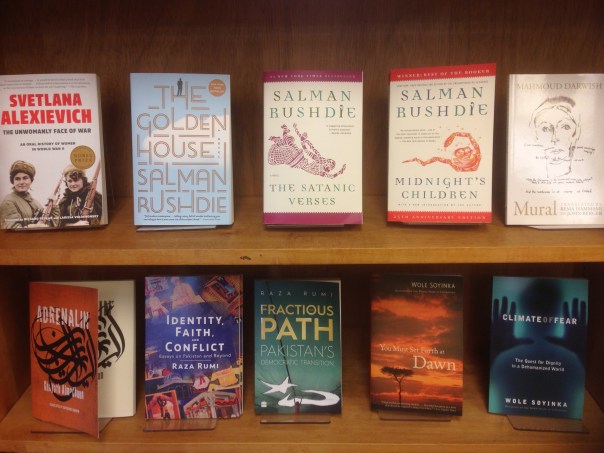
Exiled writers: display at Buffalo Street Books
Ithaca City of Asylum supports writers whose works are suppressed, whose lives are threatened, whose cultures are vanishing, and whose languages are endangered. Many writers in today’s world find themselves in this position–but being persecuted for the written word is nothing new.
Our project is partnering with Buffalo Street Books this month in a display of books by authors who have been persecuted, exiled, jailed, or threatened for their creative work. Books by our writers in residence join books by Nobel Prize winners and bestsellers who share the common thread of writing courageously in the face of persecution.
Stop by the store in the Dewitt Mall at 215 North Cayuga Street in Ithaca, and take a look.
Stories from Jos, Nigeria

Kanchana Ugbabe reads her story “Blessing in Disguise.”
Thank you to everyone who attended Voices of Freedom 2018 last night, October 4, at Buffalo Street Books. Kanchana Ugbabe, Writer at Risk in Residence at Fordham University, shared stories of the current violence and division in her long-time home of Jos, Nigeria. She read a story from her collection, Soulmates.

Kanchana Ugbabe and an Ithaca High School student.
On October 5, Kanchana visited a fiction class at Ithaca College, where she talked about the craft of writing, and the role her stories came to play in her life when she lived–as an immigrant from Asia–in Nigeria . “Writing became the lens through which I experienced the culture,” she told the class.
We’ll add more about this evening in support of literature and human rights soon.

Kanchana Ugbabe and Raul Palma, creative writing instructor at Ithaca College.
Exiled writer to speak on women, conflict, and the migrant experience Oct. 4 at Buffalo Street Books
For Kanchana Ugbabe, writing is not just a calling. It is also, she says, “almost a strategy for survival.”
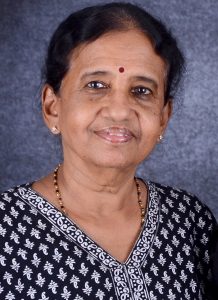
Kanchana Ugbabe, writer and scholar from Nigeria
Ugbabe will read from her fiction and discuss her life as a South Asian, an expatriate, a woman, a teacher and a writer in exile at Ithaca City of Asylum’s Voices of Freedom 2018 celebration. The free event will take place on Thursday, October 4 at 7 p.m. at Buffalo Street Books in the DeWitt Mall, 215 N. Cayuga St. in downtown Ithaca. A reception and book signing will follow.
Ugbabe was born and raised in Chennai, India, studied in Scotland and received a Ph.D. in literature from Flinders University in Australia. In the early 1980s, she moved to Jos, Nigeria, where she took a job as a professor of English and was active with the Association of Nigerian Authors.
Jos, which sits in the “Middle Belt” between Nigeria’s Muslim majority north and Christian south, was a peaceful place when she arrived. But in 2001, she said, “things suddenly exploded.” Since then, thousands have been killed and many more have been displaced by communal violence.
In 2015, after a series of attacks on colleagues and friends, Ugbabe’s house was forcibly invaded. Fearing for her life, she fled the country and eventually found refuge as a visiting scholar in Harvard University’s women and gender studies department. In November 2017, she became Fordham University’s first-ever Writer at Risk in Residence, with support from PEN America, Artists at Risk Connection and Westbeth Artists Housing.
Ugbabe’s fiction and research focus on home, belonging and the migrant experience. She also explores writing as a coping mechanism for women living in conflict zones or displaced by violence. Her short story collection, Soulmates, was published by Penguin in 2011. At the Voices of Freedom event, she will talk about her life, read her story “Blessing in Disguise” and take questions.
“We are honored to have Kanchana Ugbabe as our featured writer for Voices of Freedom 2018,” said Gail Holst-Warhaft, chair of the Ithaca City of Asylum (ICOA) board. “She is a distinguished writer who focuses her work on the challenges faced by women, especially women writers, in Africa. After fleeing her home in Nigeria, she has been a voice for many others who have been affected or displaced by violence and persecution.”
Founded in 2001, Ithaca City of Asylum is an all-volunteer project of the Center for Transformative Action at Cornell. Working with Ithaca College and Cornell, ICOA provides refuge in Ithaca for dissident writers and promotes freedom of expression and human rights. ICOA is one of two North American members of the International Cities of Refuge Network, supporting writers whose works are suppressed, whose lives are threatened, whose cultures are vanishing and whose languages are endangered.
The annual Voices of Freedom event, held in conjunction with Banned Books Week, celebrates literature, social justice and freedom of speech. Kanchana Ugbabe’s visit to Ithaca is made possible by support of the Community Arts Partnership and the partnership of Artists at Risk Connection, a project of PEN America. The event is cosponsored by Buffalo Street Books; the Mario Einaudi Center for International Studies and South Asia Program at Cornell; the Ithaca College Department of Writing; and the Ithaca College Women’s and Gender Studies Program.
Ithaca City of Asylum on WRFI Friday, Sept. 7, 4-5 p.m.
Ithaca City of Asylum will get some air time Friday, Sept. 7, 4-5 p.m. on the Human Rights and Social Justice Program on WRFI 88.1 FM.

Board members Edward Hower and Kate Blackwood will have a conversation with host Ute Ritz-Deutch about the project’s mission, about freedom of expression, about about the issues and challenges writers face when they are persecuted for what they write. They’ll also share details and insight about the upcoming Voices of Freedom event October 4 at Buffalo Street Books.
Turkish researcher becomes her own subject
As a political scientist studying the relationship between academia and government, Simten Coşar knew a lot about the ways in which official ideology can undermine academic independence.
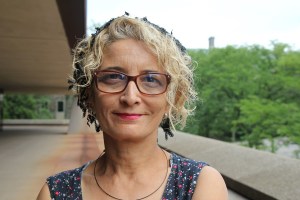
Her doctoral thesis was a study of the state and the intellectual in Turkey. As a professor in Ankara, she advised graduate students, wrote articles and books and lectured widely on politics, media and the academy. A self-defined structuralist and feminist, Coşar grounded her work in both fact and theory.
She was also involved with Scholars at Risk, an international network that provides support for threatened academics around the world. From the relative safety of Turkey, she wanted to show solidarity for colleagues in authoritarian states.
Then, in January 2016, things suddenly got personal.
That was when Coşar joined 1,128 Turkish academics in signing a declaration, titled “We Will Not Be a Party to this Crime,” calling for the government to stop its attacks against minority Kurds. Soon more than 2,200 would sign.
The reaction to the declaration was swift, led by extreme nationalist groups with ties to the government of Recep Tayyip Erdoğan. “There was a public campaign accusing the signatories of supporting terrorist activities,” Coşar recalled from her office at the Cornell Institute for European Studies(CIES).
“Just with a click, I was turned into a field of research myself,” she said. “It was what we had been talking about in the abstract turned into practice.”
Across Turkey, university administrators began firing faculty members after hasty hearings. “Some of my colleagues were not only being investigated by their universities, but they were being called to the criminal court,” she said. “In a country where war is not that unusual, where state violence is not that unusual, a call for peace is annoying for the authorities. So they attacked.”
Just with a click, I was turned into a field of research myself. It was what we had been talking about in the abstract turned into practice.
The crackdown took her by surprise. “At first it was just pure fear,” she said. “Fear of being arrested, fear of being dismissed, but mostly the unease of not being able to foresee what was going to happen. This lasted for about a month, or a month and a half, and then I got tired of it. It does not help, it paralyzes you, it consumes you. So I started to get involved in solidarity networks in Turkey. And I started to write.”
By that time, she was on sabbatical at the University of Massachusetts, Amherst, working on a project about feminist academics in the United States. When her time at UMass was over, she thought about returning home, but opted to take a visiting professor position at Carleton University in Ottawa, Canada, where she taught until the end of last year.
She is not banned from traveling to Turkey – in fact, she was there in May to help care for a family member. She found the political situation dire, but she was heartened by signs of what she calls “the micropolitics of hope” – the fact that academics, political dissenters and other marginalized people have found ways to stay active despite the limitations placed on them.
But the uncertainty makes it hard for her to focus on her work there. “I was not able to write in my country,” she said. “It was not like someone stopped me from writing, but I couldn’t start.”
This winter, she came to Cornell as a visiting scholar with CIES, with support from the Office of the Vice Provost for International Affairs, the Mario Einaudi Center for International Studies and the Institute of International Education’s Scholar Rescue Fund.
At Cornell, she said, the words have flowed.
“It has been amazing,” Coşar said. “I have been able to do the things that I wasn’t able to do for the last two and a half years. I completed manuscripts, I applied for research funds, I submitted a book proposal. The academic environment is so hospitable here. My colleagues are friendly and supportive and understanding. I cannot help but write, and the subjects that I am studying are right at the center of what is happening.”
That is exactly what CIES director Esra Akcan had hoped for. “Scholars with the courage to speak out against repressive regimes are increasingly under threat worldwide,” she said. “Cornell is well-positioned to provide a supportive community for these academics, and the space to continue their research, teaching and activism.”
Since 2004, the university has welcomed four researchers under the Scholar Rescue Fund program. Last year, CIES hosted Azat Gündoğan, a sociologist from Turkey who had also signed the so-called peace declaration.
Under Erdoğan, Turkey has become an international battleground for academic rights. Since 2016, an estimated 6,000 researchers, teachers and others have lost their jobs at Turkish universities because of their political views. Having experienced the crackdown firsthand, Coşar has been struck not just by the numbers, but by the emotional effects.
“You cannot be sure of yourself, how democratic you are, how egalitarian you are, until you are pushed into a situation where your principles are tested,” she said.
Coşar sometimes questions her own response. “After a year or so in North America, I still feel that divide in myself, asking whether I would rather be in my country, directly involved in the solidarity networks, rather than being abroad. But for now the balance is tipping toward staying away. Perhaps I’m being selfish.”
After a pause, she adds, “I’m always critical of myself, but my conscience is okay.”
It helps that she and her dog have found a place where they feel at home. “I love Ithaca,” she said with a smile. “There’s a sense of community here. And Cornell is a great place for academic production.”
Jonathan Miller is associate director for communications at the Mario Einaudi Center for International Studies at Cornell University. This article was first published by the Cornell Chronicle.
Finding Asylum: Ithaca City of Asylum’s first short-term writer in residence
Short-term writer-in-residence for Ithaca City of Asylum Raad Rahman will lead lectures and public readings through May 9. She will present a seminar at Cornell’s South Asia Program on Monday, April 23 at 12:15 p.m. in G08 Uris Hall. During her residency she will work on a novel.

Read more about her work and mission in The Ithaca Times.
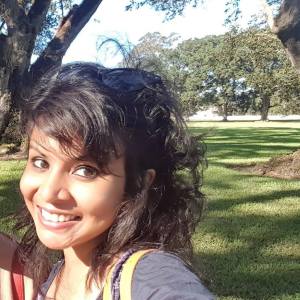
Raad Rahman, spring 2018 visiting writer with Ithaca City of Asylum
Dissident Bangladeshi writer visits Ithaca April 8-May 9
Raad Rahman, a journalist, novelist, essayist and human rights advocate from Bangladesh, will be in Ithaca from April 8 to May 9 as a writer-in-residence with Ithaca City of Asylum (ICOA). She will meet with Cornell students and faculty and present a seminar at the South Asia Program on April 23 at 12:15 p.m. in G08 Uris Hall.
Raad Rahman, spring 2018 visiting writer with Ithaca City of Asylum
Rahman has worked for media and human rights organizations in the United Kingdom, India, Jamaica, Hungary and the United States. She says she focuses her fiction and journalism on bringing repressed stories into the open. She has received death threats in Bangladesh for her writing on LGBT issues; fellow journalists there have been murdered.
“The situation in Bangladesh is dire for writers,” she said. “Muslims like me are under attack. I want to continue to tell our stories at a time when diverse voices regarding Islam and Muslim females are few and far between in mainstream media.”
Rahman’s writing has been published by The New York Times, The Paris Review, The Baffler, The Guardian, Guernica, VICE, The Rumpus, Roads and Kingdoms and UNICEF. Guernica nominated one of her essays for the 2017 Pushcart Prize.
She holds a bachelor’s degree from Bard College and a master’s degree from Central European University in Budapest, Hungary. She has received fellowships and grants from the Rory Peck Trust, the International Women’s Media Foundation, PEN America, Open Society Foundation, Bard College and Harvard’s Kennedy School and completed residencies with the OMI International Arts Center, Hedgebrook and Hypatia-in-the-Woods.
Ithaca City of Asylum, a not-for-profit project of the Center for Transformative Action, provides refuge in Ithaca for dissident writers and promotes freedom of expression. Founded in 2001, ICOA is one of two North American members of the International Cities of Refuge Network, a worldwide consortium. The project has hosted six writers for two-year residencies in Ithaca. Rahman is ICOA’s first short-term writer-in-residence.
Rahman will give two public readings. On April 11, she will be the featured writer at the Finger Lakes Environmental Film Festival’s literary showcase. Her reading from her work, “When the Politics Becomes Personal: Using Fiction and Nonfiction to Address Political Violations,” is at 6 p.m. at Ithaca College’s Handwerker Gallery. On May 6, she will read from her fiction as part of Ithaca’s Spring Writes Festival. Her presentation, “Love, Justice and Extremism in Bangladesh,” is at 2 p.m. at Buffalo Street Books, Ithaca.
Rahman plans to use her residency to work on her current project, a novel that tells the story of two teenagers pitted against each other after a high-profile terrorist attack, and to finish a book of essays.
The residency is made possible in part with funds from Cornell’s Office of the Vice Provost for International Affairs. ICOA is also a community partner of the Kitchen Theatre Company, Ithaca College and the Tompkins County Public Library.
Ithaca Out Loud Performers & Audio
On September 27, 2017, Ithaca City of Asylum hosted “Ithaca Out Loud,” an evening of literature and theater at the Tompkins County Public Library. Six Ithaca actors brought the work of six Ithaca authors to life with dramatic readings. Enjoy the recordings!
Welcome
Saviana Stanescu & Camilla Schade
Raza Rumi & Greg Bostwick
Alison Lurie & Cynthia Henderson
Katharyn Howd Machan & Katie Spallone
Anthony DiRenzo & Godfrey Simmons
Diane Ackerman & Kate Klein


Ithaca Out Loud

Ithaca City of Asylum (ICOA) will celebrate literacy and freedom of expression and commemorate Banned Books Week 2017 with “Ithaca Out Loud,” an evening of literature and theater, on Wednesday, September 27 at 7:00 p.m. at the Tompkins County Public Library (TCPL), located at 101 E. Green Street in Ithaca, NY. The event is free and open to the public, and refreshments will follow.
ICOA, a not-for-profit project of the Center for Transformative Action, provides refuge in Ithaca for dissident writers and promotes freedom of expression and human rights. Founded in 2001, ICOA is a member—one of only two in North America —of the International Cities of Refuge Network, a worldwide consortium of cities of asylum. ICOA is also a community partner of TCPL.
An Ithaca version of the National Public Radio show “Selected Shorts,” the September 27 event will feature stories, poems, and drama by six of Ithaca’s most beloved authors read aloud and brought to life by six of the region’s most celebrated actors. Among the featured works is a story by Raza Rumi, ICOA’s emeritus writer-in-residence, a Pakistani journalist and policy analyst who has authored a memoir, Delhi by Heart, and a political history of Pakistan, A Fractious Path, both published by HarperCollins India. Rumi is currently teaching at Ithaca College and has taught recently in the Cornell University Institute of Public Affairs. He also serves as consulting editor of the Pakistan weekly The Friday Times and contributes to international media outlets, including the Huffington Post, New York Times, al Jazeera, and others. Since he arrived in Ithaca, he has participated in numerous local events, including Spring Writes and the Finger Lakes Environmental Film Festival.
Greg Bostwick, professor of acting at Ithaca College with more than 70 regional roles to his name, will perform a passage from Rumi’s memoir Delhi by Heart.
Also appearing in Ithaca Out Loud 2017 are:
Godfrey Simmons, artistic director of Civic Ensemble, performing a short story by Anthony Di Renzo, who teaches writing at Ithaca College.
Cynthia Henderson, professional actor and associate professor in Ithaca College’s Department of Theatre Arts, performing a folk tale by Pulitzer Prize-winning author Alison Lurie.
Kate Klein, Actor’s Workshop of Ithaca graduate, performing a poem by Diane Ackerman, author of two dozen award-winning works of poetry and nonfiction including The Zookeeper’s Wife.
Camilla Schade, actor and teaching artist, performing “Don’t/Dream,” a monologue by playwright and scholar Saviana Stanescu, assistant professor in Ithaca College’s Department of Theatre Arts.
Katie Spallone, co-director of the Actor’s Workshop of Ithaca, performing a poem by Katharyn Howd Machan, author of 32 published collections and professor of writing at Ithaca College.
This event is made possible in part with funds from the Community Arts Partnership of Tompkins County.
New film on Ithaca City of Asylum
This short documentary was produced by Maureen Wietecha, ICOA’s spring 2017 intern. It provides an overview of ICOA work and features interviews with Raza Rumi, our current writer in residence, as well as three of our board members, Barbara Adams, David Guaspari, and Kate Klein.
Join our mailing list

 Ithaca City of Asylum